Evaporative Cooling in Poultry Houses Using Wet PadsAn Efficient and Cost-Effective Method to Improve Broiler Welfare in Hot Climates
Introduction
High temperatures during the summer can cause heat stress in broiler chickens, which negatively impacts their health, feed conversion, and growth rates. One of the most efficient and widely used cooling methods is evaporative cooling using wet pads, also known as cooling pads.
How the System Works?
The system relies on the principle of evaporative cooling:
Hot outside air is drawn through a wet cellulose pad (the “wet pad”), where water evaporates, absorbing heat and cooling the air. The cooled air then enters the poultry house, lowering the internal temperature significantly.
System Components:
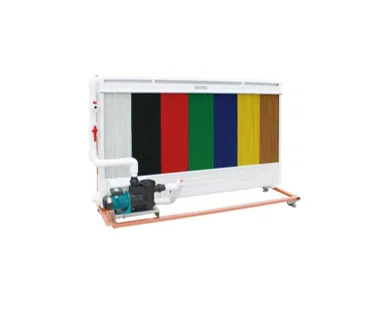
- Cooling pads (usually cellulose-based)
- Water reservoir and pump
- Distribution piping
- Water return system
- Ventilation fans (exhausting air from the opposite wall)
Advantages:
- Efficient Cooling – Can reduce air temperature by 5–12°C depending on humidity.
- Improves Bird Welfare – Reduces heat stress, mortality, and improves feed intake
- Energy Efficient – Requires less electricity than mechanical air conditioning.
- Automated Operation – Can be controlled by thermostats and climate controllers.
Challenges & Maintenance:
- Pads must be cleaned regularly to prevent algae and clogging.
- Water quality is important – hard water may reduce efficiency.
- Less effective in high humidity environments – good ventilation is key.
- Pumps and water flow must be inspected regularly.
Conclusion
Evaporative cooling using wet pads is a proven and cost-effective method to reduce heat in broiler houses. When combined with proper ventilation and maintenance, it can create optimal growing conditions, improve productivity, and support animal welfare — especially in hot regions like the Middle East or Southern U.S.